


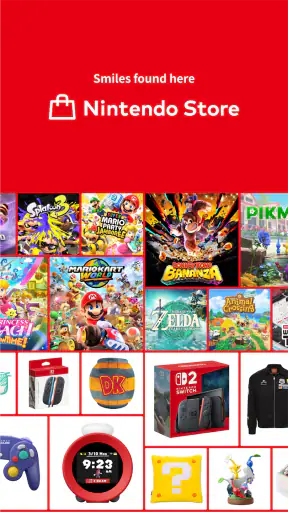
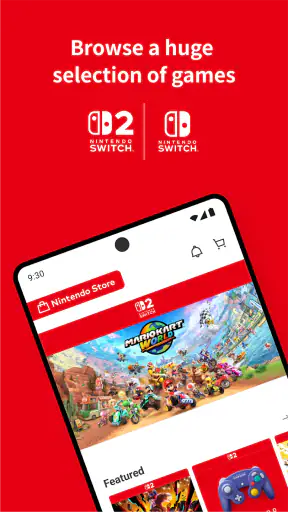
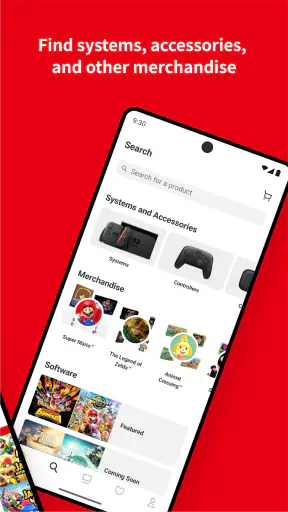
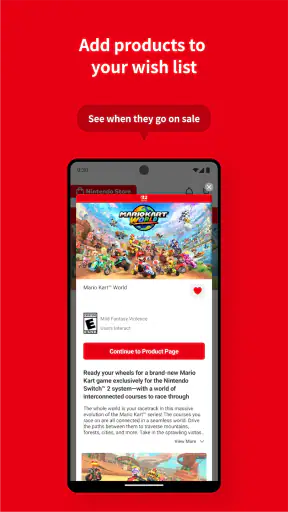
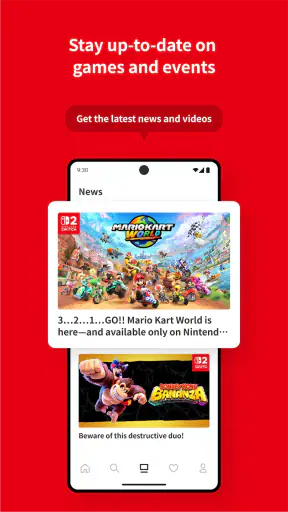
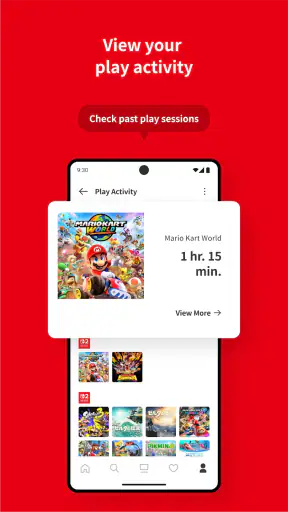
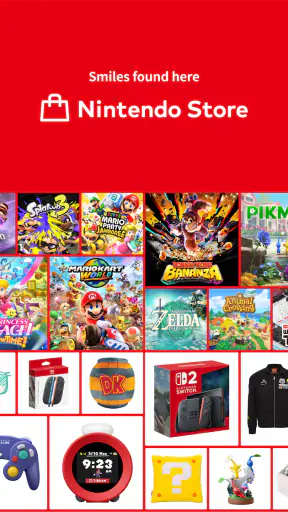
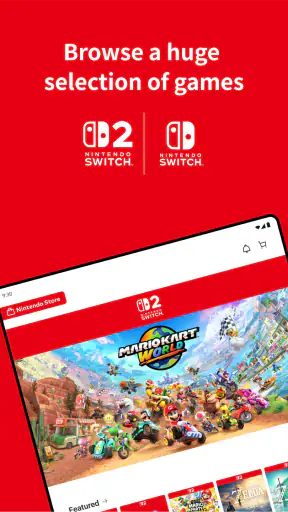
I opened Nintendo Store expecting a straightforward shopping app, but the useful question is not whether it can replace every retail option. It is whether it makes the path from “I want something Nintendo-related” to “I know what to buy and where to continue” feel easier. In my experience, that is the right way to judge it. It is a free shopping app from Nintendo Co., Ltd., aimed at people who already care about Nintendo products and want a more direct place to explore them.
The store summary, “Smiles found here,” gives the app a friendly tone, while the short description, “Nintendo Store,” keeps expectations simple. This is not presented as a general marketplace. It is a branded destination, and that focus is both its main strength and its first limitation. If Nintendo is already part of your everyday entertainment, the app feels relevant quickly. If you are looking for the lowest price across many retailers, I would still begin elsewhere.
From a shopping idea to a more confident choice
Starting with a real need instead of browsing aimlessly
My most useful test for a shopping app is a realistic one: imagine a family member wants a Nintendo-themed gift, but has not decided whether to choose a game, accessory, character item, or something less obvious. A normal web search can produce a long mixture of official pages, large retailers, second-hand listings, and unrelated merchandise. Nintendo Store gives that search a narrower starting point.
That narrowness matters. A focused catalog can reduce the mental work of deciding whether a result is genuinely connected to Nintendo. I can approach the app with a specific intention, such as checking what is available for a particular interest, or with a looser goal, such as finding a suitable present. The second situation is where the branded environment is most comfortable: it encourages discovery without making me sort through an entire internet of questionable results.
I would not treat it as a universal shopping assistant. The app belongs in the early and middle stages of a purchase decision, when I am identifying suitable products and confirming what feels appropriate. For urgent buying, price hunting, or comparing every seller, a retailer comparison workflow remains more efficient.
Moving through the app without confusing inspiration with checkout
Once I have a general idea, I use the app as a filter rather than as a reason to keep scrolling forever. I look for products that match the recipient, the occasion, and the kind of Nintendo connection they already have. That sounds simple, but it prevents a common shopping mistake: choosing an item because it looks appealing in isolation rather than because it fits the person receiving it.
A practical workflow is to separate three decisions. First, identify the theme or character that matters. Second, decide whether the purchase should be practical, collectible, playable, or decorative. Third, confirm the final buying route and any details that matter before committing. The app is most helpful when I make those decisions in that order, because browsing without a purpose can turn a quick search into a long session with no clear outcome.
For a parent shopping with a teenager, the age classification is worth noticing. Nintendo Store is marked Teen, so I would not assume that every part of the experience is designed for young children to manage independently. I would let the child help with discovery while an adult handles the final review of the product and purchase details. That is a sensible handoff, especially when the desired item is a surprise or the buyer needs to keep spending under control.
Using the app as a handoff tool
The strongest role I found for this kind of branded store is not necessarily completing every part of the transaction in one uninterrupted session. It can serve as the shared reference point between the person who wants something and the person who will actually buy it. A teenager can show a parent the relevant item, a friend can send a product idea to another friend, and a collector can return later to continue checking options.
That handoff changes how I judge convenience. A good shopping experience is not only about how quickly I tap through screens. It is also about whether the other person understands what I am recommending. A Nintendo-focused setting gives the conversation useful context, because the recipient does not have to wonder whether a result is loosely related or genuinely part of the brand’s shopping world.
There is a trade-off here. A handoff works best when both people already understand what the app represents. Someone unfamiliar with Nintendo products may still need explanations about compatibility, editions, platforms, or whether an item is meant for play, display, or collecting. I would not rely on the app alone to remove that knowledge gap. I would use it to point the conversation in the right direction, then confirm the important details together.
What happens after the discovery stage
After I have found a promising option, I slow down instead of treating the first appealing result as the final answer. This is where I compare the app with the usual alternatives. Large retailers are often better for delivery choices, seller comparison, and broad product searches. General search engines are better when I want independent reviews or a quick price check. Second-hand marketplaces can be more useful for older or discontinued items, although they require more care.
Nintendo Store has a different advantage: context. I am less likely to lose the original Nintendo connection while browsing. That makes it a better first stop for brand-led discovery than a general marketplace, even if it is not automatically the best final stop for every purchase. My preferred workflow is therefore hybrid: use the official store to understand what I want, then use the most suitable purchasing route for the specific situation.
This approach also answers a question many shoppers have: is a dedicated store worthwhile if I already know what I want? Sometimes. If the product is strongly tied to Nintendo and I want a focused confirmation before buying, the app can save time. If I only care about finding the cheapest available offer immediately, opening a comparison service first is probably more efficient.
The outcome: less uncertainty, not magic convenience
The result I get from Nintendo Store is a clearer purchase direction. I may begin with a vague thought such as “I need a Nintendo gift,” but finish knowing which kind of item suits the person and which details need checking before purchase. That is a meaningful outcome, even though it is less dramatic than a full shopping platform that handles every possible step.
I especially like the app for planned browsing. It gives me a place to return to when I am not ready to decide immediately, and it keeps the search centered on Nintendo rather than on unrelated products. For gift planning, that can be more valuable than speed. I can explore first, discuss the idea with someone else, and make the final decision when the practical details are settled.
For an impulse purchase, the benefit is less clear. A focused catalog can make it easier to find something appealing, but it can also encourage browsing beyond the original budget. My advice is to decide the purpose and spending limit before opening the app. That small preparation turns the experience from passive scrolling into a controlled search.
Specific habits that make the app more useful
My first tip is to use it before you know the exact product, but after you know the recipient. Starting with the person’s interest gives the browsing session a filter that the app itself cannot provide. For example, a gift for a dedicated fan should be approached differently from a first Nintendo-related present for someone who only recognizes a few characters.
My second tip is to treat every promising discovery as a candidate, not a conclusion. I would note the product name or identifying details, then check the final purchasing information before telling someone else that the item is definitely suitable. This is particularly useful when a child finds something exciting and an adult needs to approve the practical side of the purchase.
My third tip is to use the app for the conversation, not just the transaction. Showing a focused Nintendo selection can help two people agree on a theme or gift direction faster than sending a vague search result. The app becomes a visual shortlist: one person brings the enthusiasm, the other adds the budget and suitability check.
A fourth useful habit is to keep discovery and comparison separate. I would not interrupt every moment of browsing with price checks, because that can make it harder to understand the available choices. Instead, I first narrow the selection inside the official environment, then compare the chosen option through the appropriate retail channel. That division of labor is more efficient than asking one app to be excellent at every stage.
Where the flow breaks down
The biggest weakness is the same thing that makes the app pleasant: its narrow purpose. A dedicated Nintendo shopping experience is not the place I would go for unrelated brands, broad household shopping, or a complete market overview. Its value falls sharply when the Nintendo connection is only incidental and my real priority is delivery speed or price.
Another point of friction appears during handoffs. A friend may send me an item recommendation, but I still need enough context to know whether it matches the recipient’s interests and practical needs. The app can support that exchange, yet it cannot make a personal decision for me. I still have to check whether the item is appropriate, wanted, and worth the money.
I also would not confuse a polished brand environment with independent buying advice. The app is naturally centered on Nintendo’s own shopping world, so I would still consult outside sources when I need impartial comparisons, long-term ownership impressions, or second-hand alternatives. That is not a reason to avoid it; it is simply a reminder to use the right tool for the question.
Device support is another basic consideration. The current version is 3.3.1 and requires Android 10 or later, so anyone using an older Android phone should check compatibility before planning around it. On a supported device, the app is positioned as an accessible free download, but “free” describes access to the app, not the cost of anything I may choose to buy through the shopping experience.
Who should install it, and who should skip it?
I would recommend Nintendo Store to Nintendo fans who enjoy browsing official products, families planning gifts, and shoppers who want a focused starting point rather than a noisy general marketplace. It is also useful for people who often need to explain a Nintendo-related purchase to someone else, because the branded context makes the handoff easier.
I would be less likely to recommend it to someone whose only goal is finding the lowest price, comparing many sellers, or buying from a second-hand market. Those shoppers should begin with comparison tools or established retailers and use the official app only if they need help identifying the right Nintendo item. People using an Android version below the stated minimum should also avoid building their workflow around it until they have a compatible device.
The audience response suggests that the app has found a solid, though not overwhelming, level of approval: it holds a 4.0 average from around 2.6 thousand ratings, with roughly 119 written reviews and over a million installs. I read those figures as evidence of real interest rather than proof that every shopping journey will be smooth. A branded store can be useful to many people while still being too specialized for shoppers who expect a full retail replacement.
My final buying workflow
If I were recommending a simple process to a friend, I would start by deciding who the purchase is for and what kind of Nintendo connection matters. I would then browse Nintendo Store to build a short, focused list. Next, I would share the strongest candidate with the person responsible for approving or paying, and together we would confirm the practical details. Only after that would I compare the final buying route when price, delivery, or seller choice matters.
That workflow captures the app’s real strength. It is not merely a place to wander through Nintendo-themed products, and it is not the universal answer to online shopping. It is a focused bridge between interest and action. Use it for discovery, confidence, and handoffs; use broader shopping tools for comparison and purchasing flexibility.
Overall, I see Nintendo Store as a worthwhile free app for the right audience, especially anyone who wants a more concentrated Nintendo shopping experience. The Teen content rating, Android 10 minimum, and current version 3.3.1 are practical details to check before installing. If you already know that Nintendo is the center of your search, I think the app can make the first part of the journey more enjoyable and organized. If your priority is simply the fastest or cheapest deal, I would keep it as one step in a wider workflow rather than making it your only shopping tool.


